
Coming soon · Release date TBA
UpdatedFart Together Controls: Steering and Co-Op Team Tips
Learn Fart Together controls for coordinated raft steering, gas power, and timing. Get practical co-op tips for narrow passages, sharp turns, and hazards.
Jump to
How Fart Together Controls Work
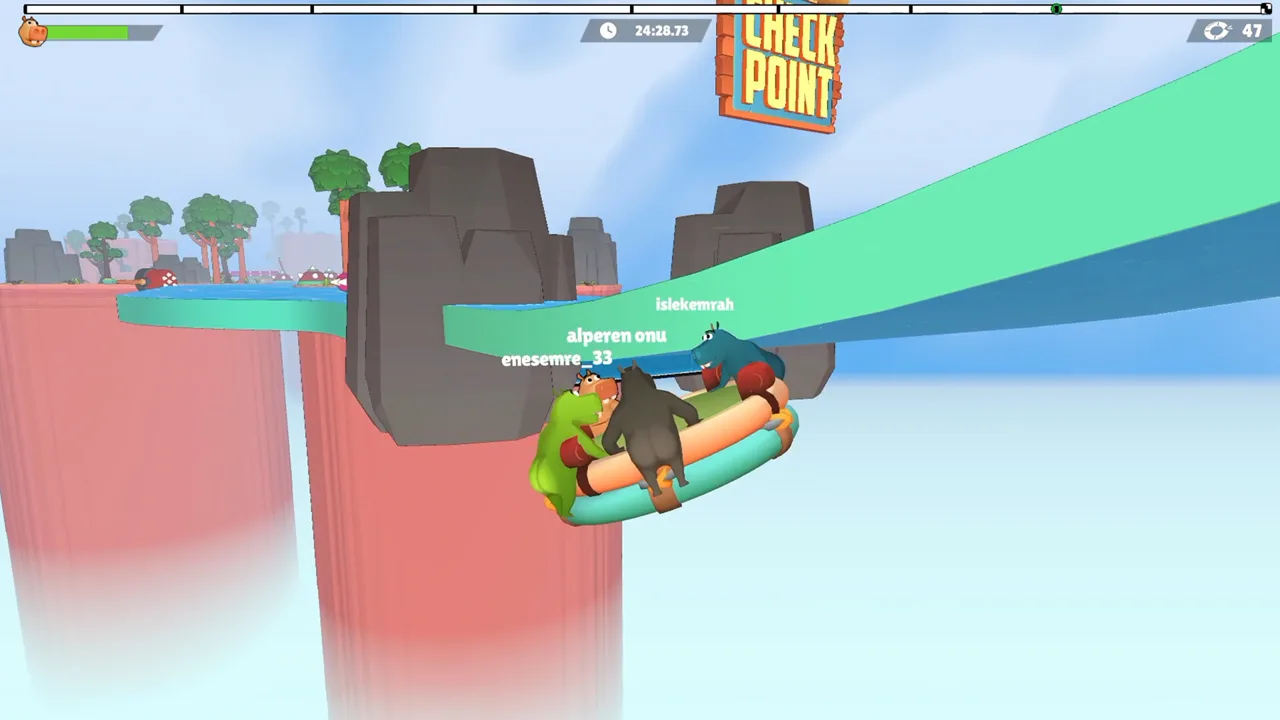
Fart Together controls put your entire crew’s steering decisions onto the same raft. Understanding Fart Together controls matters because one badly timed burst can send everyone off course. Your team controls direction, timing, and gas power while navigating physics-based obstacle courses, so coordinate each maneuver before everyone starts pushing at once.
In co-op, 2–4 players share a raft powered by farts. Each player’s force, direction, and timing affect its movement. That shared response is the central challenge: your own input becomes part of whatever the rest of the crew is doing.
The PC game supports keyboard-only play, full controller support, and the Steam Input API. Those options let you choose an input device while tackling the same underlying task: getting several players to move one raft through a difficult course.
| Control feature | Supported functionality |
|---|---|
| Keyboard-only option | Play using a keyboard |
| Full controller support | Play using a controller |
| Steam Input API support | Integration with Steam’s input system |
| Shared raft steering | Coordinate direction, timing, and gas power with teammates |
Start by learning how your input affects the shared raft. Choose an open stretch and coordinate a simple movement before attempting a difficult passage. Ask teammates to announce their actions so you can connect the raft’s response with what everyone actually did.
Separate input familiarity from team coordination. Learn your own controls, then practice using them alongside the crew. A comfortable controller or keyboard setup still needs clear communication when several players influence the same movement.
For the Windows demo, gather 2–4 players and allow time to learn together. Demo runs take roughly 15–55 minutes, depending on team coordination. Give the group room to practice instead of turning the opening minutes into a race.
Understand Direction Before Adding More Power
The raft responds to the force, direction, and timing of each player. That means steering involves more than choosing where you want to go. Your crew also needs to agree on how and when to move toward that target.

Think about Fart Together controls through these three connected elements:
| Element | How it affects the raft | Practice tip |
|---|---|---|
| Direction | Each player’s direction contributes to the raft’s movement | Agree on the intended route before acting |
| Force and gas power | Each player’s force influences the raft’s response | Practice controlled movement before attempting a demanding maneuver |
| Timing | Early, late, or coordinated actions affect the whole crew | Use a shared verbal cue for joint actions |
Before a sharp turn, name the intended path clearly. Say “toward the opening” or identify the next visible obstacle. Avoid shouting several different corrections while teammates are already trying to execute the previous instruction.
Use the same directional language throughout a run. If “left” creates confusion, identify a visible destination instead. Keep the call specific enough that everyone understands the same movement.
Practice a Shared Steering Routine
Use a simple communication routine while learning:
- Name the next target.
- Agree on the direction of travel.
- Announce the intended action.
- Execute together.
- Watch the raft’s response before calling another correction.
Treat this as a practice routine, then adapt it to the course. Moving obstacles demand timely decisions, so keep calls short enough to use while approaching a hazard.
When a turn goes wrong, identify the direction each player intended. Ask whether someone misunderstood the target or reacted after the rest of the crew. Change the confusing instruction before repeating the attempt.
Avoid answering every steering problem with extra gas. The courses require both faster and slower movement, and poorly timed force can send the raft away from its intended path. Focus on getting everyone’s direction and timing aligned before asking for more power.
Coordinate Timing and Manage Gas
Timing gives Fart Together controls their cooperative challenge. A player can choose the intended direction and still disrupt the maneuver by acting too late. Likewise, several players acting at different moments can turn a shared plan into competing corrections.

Use one caller for a difficult maneuver. Let that player announce the target and give the action cue, while teammates keep urgent hazard warnings brief. Rotate the role if someone else has a clearer understanding of the next section.
Choose a short cue such as “ready, go.” Agree on which word means act. Keep the cue consistent so teammates can prepare without guessing when the movement should begin.
Prepare Before the Obstacle Demands It
Look ahead to the next narrow passage, sharp turn, or moving hazard. Discuss the intended maneuver while approaching it, then use a brief cue when action is needed.
Avoid lengthy explanations during the maneuver itself. Save detailed discussion for after the attempt, when everyone can describe what happened without also steering.
The demo also involves stamina management. Include stamina in your team communication, particularly when preparing for a coordinated action. Tell the crew when you need to manage your stamina rather than silently missing the agreed moment.
Practice these habits together:
- Announce readiness before a joint maneuver.
- Speak up if you cannot follow the planned action.
- Keep the action cue consistent.
- Call attention to an approaching obstacle early.
- Review missed timing before trying the same maneuver again.
Review the Action, Then Adjust
After a failed attempt, describe the movement in plain terms. “I acted after your cue” gives the team something concrete to change. “The controls are impossible” leaves everyone guessing.
Change one part of the plan at a time. Keep the target direction consistent while working on the cue, or keep the cue consistent while clarifying the intended direction. Use the raft’s response to judge whether the adjustment helped.
Make Fart Together controls easier to learn by connecting each mistake to a specific action. Focus on who moved, which direction they intended, and when they acted.
Handle Narrow Passages, Turns, and Moving Obstacles
Fart Together’s courses include narrow passages, sharp turns, moving obstacles, and hazards that throw the raft off balance. Each puts a different demand on your crew’s coordination.
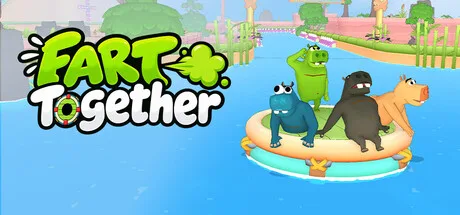 Image: Steam / GamesMrkt
Plan around the obstacle ahead instead of giving the same instruction everywhere.
| Course challenge | What your team must handle | Suggested response |
|---|---|---|
| Narrow passage | Limited room for the shared raft | Agree on the path through before entering |
| Sharp turn | A demanding direction change | Call the turn early and coordinate the maneuver |
| Moving obstacle | A hazard whose position changes | Watch its movement and agree on when to act |
| Balance-disrupting hazard | An impact on raft stability | Communicate the disruption before adding competing corrections |
| Sections requiring speed changes | Moments that call for faster or slower travel | State the intended pace before the next action |
Narrow Passages
Identify the opening your crew intends to use. Make sure everyone is steering toward that same space before attempting to pass through.
Keep instructions brief during the approach. If the raft moves away from the intended line, call out the change clearly and agree on a correction. Avoid layering several new instructions over an unfinished maneuver.
Sharp Turns
Prepare the crew before reaching the turn. Name the direction, announce the intended action, and use the shared cue.
After a missed turn, discuss whether the problem began with direction, power, or timing. Adjust the relevant part of the plan instead of asking everyone to do everything differently.
Moving Obstacles
Watch how the obstacle moves before committing to the crossing. Agree on the moment your crew intends to act, then coordinate around that decision.
If someone misses the cue, announce it immediately. Give teammates useful information about the action they received rather than leaving them to guess why the raft changed course.
Hazards That Disrupt Balance
When a hazard throws the raft off balance, identify what happened before issuing several corrections. Let one caller organize the response, and keep other communication focused on immediate dangers.
Practice Fart Together controls with the obstacle in mind. Use the course’s demands to decide what to work on next: shared direction for a passage, coordinated timing for a moving hazard, or a clearer plan for changing pace.
Fix Common Team Control Problems
When the raft repeatedly goes off course, review the team’s inputs before changing your entire setup. Wrong directions, late reactions, and poorly timed gas all affect the shared raft.
Use the failure itself to narrow your practice.
| What happened | What to review | What to try next |
|---|---|---|
| The raft moved away from the intended route | Each player’s intended direction | Name one shared destination before acting |
| A maneuver broke down after the cue | When each teammate acted | Repeat the attempt with a clearer action word |
| A turn became chaotic | Overlapping instructions and corrections | Assign one caller for that turn |
| The same passage keeps causing trouble | Whether the crew shares the same plan | Discuss the approach before entering again |
Keep the review short and specific. Ask each teammate what they tried to do, then choose one adjustment. Avoid turning every mistake into a full debate about the game’s physics.
Use supported input options to get comfortable with Fart Together controls. Choose keyboard-only play or a controller according to your preference, then spend practice time learning how your actions combine with everyone else’s.
Keep the game mode in mind, too. Co-op puts 2–4 players on the same raft, while competitive modes support up to 8 players. For the Windows demo, plan around the 2–4-player co-op experience.
Online co-op requires a stable internet connection. Include that requirement in your session planning alongside getting the crew ready to play.
To get started, download the Fart Together demo on Steam. Use the opening attempts to establish shared directions, a clear cue, and concise communication. Build those habits into each maneuver as the course becomes more demanding.
FAQ
What are the main Fart Together controls?
Fart Together controls center on direction, timing, and gas power. In co-op, 2–4 players influence the same raft, and each player’s force, direction, and timing affect its movement.
Does Fart Together support controllers and keyboards?
Yes. The PC game supports keyboard-only play, full controller support, and the Steam Input API. Choose your preferred supported device and practice coordinating its inputs with your teammates.
How many players can play Fart Together?
Co-op supports 2–4 players sharing a raft. Competitive modes support up to 8 players. The Windows demo offers 2–4-player co-op.
How long does a Fart Together demo run take?
A demo run takes roughly 15–55 minutes, depending on your team’s coordination. Allow time to practice steering, manage stamina, and work through the course together.
Continue with
 Fart Together Beginner Guide: Steer, Sync, and SurviveUse this Fart Together beginner guide to coordinate your crew, manage gas, tackle tricky raft obstacles, and avoid common mistakes in the free Steam demo.
Popular pages
Fart Together Release Date: Steam Launch and PC Guide
The Fart Together release date is coming soon on Steam. Check co-op player counts, Windows PC requirements, and raft gameplay before planning a game night.
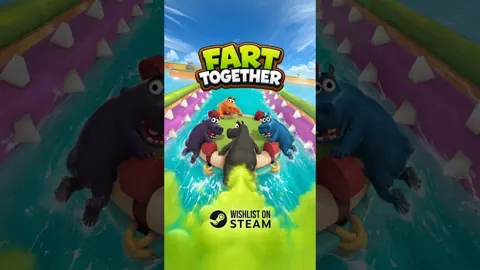
Fart Together Demo: Download, Co-Op, and Playing Tips
Try the Fart Together demo on Steam with 2–4 players. Learn to get started, coordinate your raft, manage stamina, and tackle tricky courses with friends.
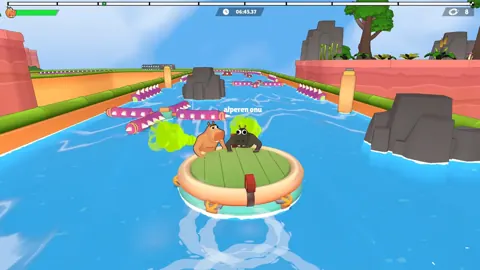
Fart Together Crossplay: Platforms and Co-Op Explained
Explore Fart Together crossplay details, Windows support, co-op player limits, local multiplayer, and Remote Play Together before planning your game night.
Fart Together Fart Timing: Coordinate Your Raft Crew
Improve your Fart Together fart timing with practical tips for coordinated raft movement, sharp turns, narrow passages, and moving obstacles. Plan ahead.
Join the community
Official channels for news, updates and player help: