
Coming soon · Release date TBA
UpdatedFart Together Fart Timing: Coordinate Your Raft Crew
Improve your Fart Together fart timing with practical tips for coordinated raft movement, sharp turns, narrow passages, and moving obstacles. Plan ahead.
Jump to
How to Improve Fart Together Fart Timing
Your entire crew shares the consequences of one badly timed fart. Fart Together fart timing matters because every player’s force, direction, and timing affect the same raft as you navigate obstacles together. Improve your Fart Together fart timing by agreeing on the next maneuver, checking everyone’s direction, and using a shared cue before committing.
In this physics-based co-op game, 2–4 players steer a raft using fart power. Sharp turns, tight passages, and moving hazards demand coordination, while a late reaction or wrong direction can throw the group off course.
Start with a simple team routine: agree, prepare, act, reassess. These are suggested communication habits you can use to organize the movement the game already asks you to coordinate.
| Movement factor | How it affects the raft |
|---|---|
| Force | Each player’s force contributes to the raft’s physical response. |
| Direction | Players’ directions influence where the shared raft goes. |
| Timing | When players act affects the team’s maneuver. |
| Team coordination | Every player’s movement affects the whole group. |
Keep those factors separate when discussing a mistake. If everyone acts together while facing the wrong way, synchronization alone will not solve the problem. If everyone agrees on direction but someone reacts late, focus your next attempt on the cue.
For your opening practice, choose one immediate objective: line up with the next passage, prepare for a corner, or coordinate movement past an obstacle. Give the crew something specific to accomplish before discussing the entire course.
Avoid turning every attempt into a contest over who can contribute the most power. The game asks you to control gas alongside direction and timing. Make the intended movement clear before asking the whole raft to commit.
Give Your Crew a Shared Timing Cue
Build your Fart Together fart timing around a cue everyone understands. Choose one person to announce the next maneuver, and let teammates flag a problem before the action starts.
Keep the caller’s job focused on coordination. The caller should describe the immediate objective and signal when to act. Everyone else still needs to watch the raft and understand the intended direction.
Agree on what each call means before reaching a difficult section. A countdown becomes less useful when one person acts during it and another waits until it ends.
The following are suggested voice callouts, rather than in-game commands:
| Suggested callout | Agree to use it for |
|---|---|
| “Line up” | Prepare the raft’s direction for the next maneuver. |
| “Ready?” | Check that teammates understand the plan. |
| “Go” | Start the agreed movement together. |
| “Less power” | Reduce the force requested for the next action. |
| “Reset the plan” | Replace conflicting instructions with one clear objective. |
Choose language your group can say quickly and recognize through laughter. Elaborate instructions are harder to follow when the raft is already approaching trouble.
Make direction calls equally clear. Agree on what “left” and “right” refer to, and avoid switching that reference during a maneuver. If your group keeps misunderstanding directional language, describe the destination instead: the opening, the corner, or the space beyond the obstacle.
Practice a shared cue somewhere manageable before relying on it near a hazard. Ask everyone whether they understood both the intended direction and the moment to act.
When a call goes wrong, identify the communication issue precisely. “I thought we were waiting” gives the group something to fix. “You’re terrible at this” mostly gives everyone another reason to yell.
Keep explanations for moments when you can discuss them. During the maneuver itself, use the vocabulary your crew already agreed on.
Adjust Your Timing for Each Obstacle
Fart Together fart timing changes with the problem in front of your raft. A narrow opening asks for careful alignment. A sharp corner asks for a coordinated change of direction. A moving obstacle also asks you to judge when to commit.

Read the upcoming section before calling for movement. Identify the immediate threat, choose the intended path, and tell the crew what the next action should accomplish.
| Course challenge | Teamwork demand | Suggested preparation |
|---|---|---|
| Narrow passages | Fit the raft through a restricted space. | Agree on the path before entering. |
| Sharp turns | Change direction together. | Announce the turn before the crew must act. |
| Moving obstacles | Coordinate movement around a changing hazard. | Watch the obstacle before choosing your cue. |
| Balance-disrupting hazards | Respond together when the raft is thrown off balance. | Keep correction calls clear and deliberate. |
Prepare Before Narrow Passages
Set your intended direction before entering a tight space. Discuss whether the raft is lined up while you still have room to make that decision.
Ask teammates to avoid competing correction calls. If someone spots a problem, acknowledge it and choose the next adjustment together. Several players independently trying to rescue the same approach can leave the crew working toward different outcomes.
Use the passage itself as the shared objective. “Through the opening” gives everyone a common destination to evaluate.
Announce Sharp Turns Early
Call out a corner before asking teammates to execute the turn. Give the group time to understand the new direction and prepare for the same action.
Keep the approach and the turn distinct in your instructions. Tell everyone when you are still preparing, then use the agreed cue for the maneuver.
After an unsuccessful turn, discuss whether the crew chose the wrong direction, acted at different moments, or used unsuitable force. Change the relevant part of the plan.
Watch Moving Obstacles Before Committing
Observe a moving hazard before choosing when to approach it. Keep attention on the space the raft needs to cross.
Base the cue on what the obstacle is doing. A rhythm that worked during another section should not replace watching the current hazard.
If teammates disagree about the opening, settle that disagreement before issuing the movement cue. Ask for a shared decision rather than letting separate guesses become separate inputs.
Coordinate Gas Power and Stamina
Fart Together fart timing also involves controlling how much effort your crew commits. Direction, force, and timing all matter, and the demo includes stamina management.
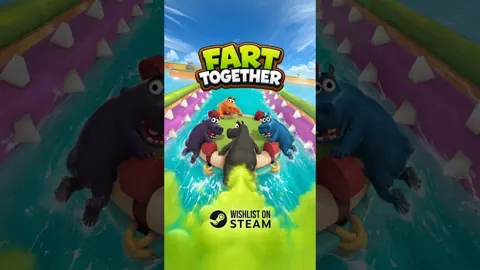
 Image: Steam / GamesMrkt
Discuss the intended strength of a maneuver alongside its direction. “Go” tells teammates when to act, but it does not tell them how much power you want them to contribute.
Use simple descriptions your group understands, such as a small adjustment or a stronger movement. Treat those as communication choices, rather than fixed game settings.
For precise sections, ask the crew to prioritize the planned adjustment. When a section calls for speeding up, make that change explicit. When you need to slow down, announce it before everyone commits to further acceleration.
Keep stamina in the conversation without letting it overwhelm the immediate task:
- Tell teammates when stamina affects your ability to follow the plan.
- Check readiness before calling for coordinated effort.
- Avoid promising a maneuver you cannot currently contribute to.
- Discuss gas use after a failed attempt alongside direction and timing.
Separate readiness from willingness. A teammate can understand the plan and still need to tell the group that their stamina makes the intended contribution difficult.
When practicing, repeat a clear objective and adjust one part of your approach at a time. Try changing the cue while keeping the intended direction consistent. On another attempt, discuss the requested power.
That makes your Fart Together fart timing practice easier to evaluate. Everyone can explain which part of the team’s plan changed and whether it helped.
Keep the discussion practical: what did you intend, what did the raft do, and what should the crew change next?
Fix Mistakes Without Adding More Chaos
When the raft goes off course, bring the conversation back to the movement. A shared physics system makes individual actions a team concern, so review the whole maneuver.
Describe the sequence plainly. Identify the objective, the cue, and any disagreement about direction or power. Give teammates room to explain what they understood.
Use this checklist to choose a focused adjustment:
| Problem to review | Adjustment to try |
|---|---|
| Someone acted before the agreed cue. | Restate exactly when the group should begin. |
| A teammate understood a different direction. | Clarify the destination before the next movement. |
| Everyone requested a different correction. | Choose one immediate objective and one caller. |
| The crew committed unsuitable force. | Specify the intended power alongside the cue. |
| Someone could not contribute as planned. | Check readiness and stamina before committing again. |
Avoid replacing the whole strategy after every mistake. If the direction was clear but the cue was misunderstood, fix the cue first. If timing was coordinated but the approach was wrong, work on the approach.
Keep successful habits in place. Reuse clear callouts, consistent directional language, and readiness checks across different sections.
The co-op demo’s run length is roughly 15–55 minutes, depending on team coordination. Leave room for learning when organizing a session, especially if your crew is still agreeing on how to communicate.
You can download the Fart Together demo on Steam to practice with your group. Focus a session on Fart Together fart timing by choosing a specific goal, such as clearer turn calls or better coordination around moving obstacles.
Give the crew a useful next instruction after each attempt. “Same direction, wait for the cue” is something everyone can act on immediately.
FAQ
What matters most for Fart Together fart timing?
Coordinate the moment of action with the intended direction and gas power. The raft responds to each player’s contribution, so agree on the maneuver before using a shared cue. Review those factors separately when something goes wrong.
Should everyone fart at the same time?
Some course situations require the whole team to act together. Follow the needs of the maneuver: agree on direction, check readiness, and synchronize when the plan calls for collective movement.
How many players can share the raft?
Fart Together supports 2–4 players steering the same raft in co-op. Competitive modes support up to 8 players. Keep your co-op instructions clear enough for everyone aboard to understand the next action.
How can we practice timing in the demo?
Choose an immediate objective, agree on direction and power, then act on a shared cue. Afterward, discuss what happened and change one part of the plan. Include stamina readiness in that check so teammates can contribute as intended.
Continue with
 Fart Together Raft Steering: Turns, Timing, and TeamworkMaster Fart Together raft steering with tips for coordinated turns, controlled speed, narrow passages, and moving hazards. Get your crew moving together.
Popular pages
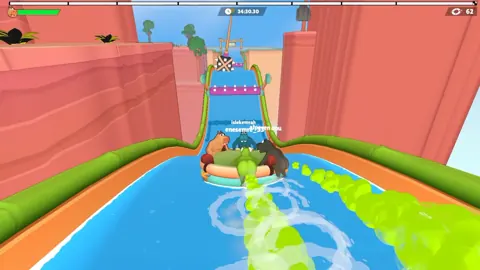
Fart Together Beginner Guide: Steer, Sync, and Survive
Use this Fart Together beginner guide to coordinate your crew, manage gas, tackle tricky raft obstacles, and avoid common mistakes in the free Steam demo.
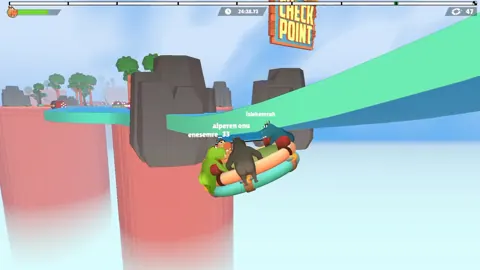
Fart Together Release Date: Steam Launch and PC Guide
The Fart Together release date is coming soon on Steam. Check co-op player counts, Windows PC requirements, and raft gameplay before planning a game night.
Fart Together Demo: Download, Co-Op, and Playing Tips
Try the Fart Together demo on Steam with 2–4 players. Learn to get started, coordinate your raft, manage stamina, and tackle tricky courses with friends.
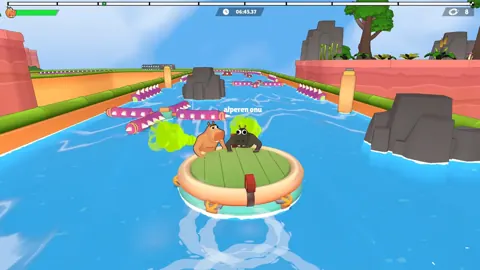
Fart Together Crossplay: Platforms and Co-Op Explained
Explore Fart Together crossplay details, Windows support, co-op player limits, local multiplayer, and Remote Play Together before planning your game night.
Join the community
Official channels for news, updates and player help: